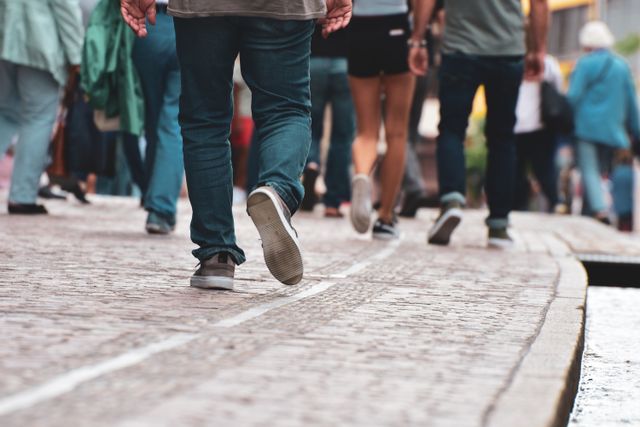
The 10,000 daily steps target is a useful benchmark for staying active on the road, but Houston tests it in ways that most cities do not. This is a city built almost entirely around the car, with few pavements in many areas, a summer climate that makes outdoor exercise genuinely dangerous between late morning and early evening, and a scale that separates attractions by distances that are simply not walkable. None of that means your step count has to collapse for the duration of a trip. It means you need a different strategy from the one you would use in London or New York.
You Still Need The Car – But Use It Deliberately
Accepting that you need a car in Houston is not the same as accepting that you will be sedentary. Renting a car when in Houston is simply a logistical necessity for getting between the districts – but the goal is to drive to places where you then walk, rather than driving everywhere and walking nowhere. The distinction matters. Plan each day around one or two walkable destinations, drive to them, and then cover them entirely on foot. Hermann Park, the Museum District, Buffalo Bayou Park, the Heights neighborhood, and Rice University’s campus are all areas where a parked car and a determined pair of legs will get you several thousand steps in pleasant surroundings. The car is a means of transportation, not a replacement for it.
Hermann Park And The Museum District Handle A Serious Morning
Hermann Park in the Museum District is the most step-friendly concentration of green space and cultural attractions in the city, and it costs almost nothing to use. The park covers 445 acres and connects to Rice University on its western edge, giving you a genuinely large circuit to cover on foot. The Japanese Garden, the McGovern Centennial Gardens, the paths around McGovern Lake, and the full loop of the park perimeter will deliver between 6,000 and 8,000 steps, depending on your pace and how many detours you take. Add a walk through the Rice University campus and a loop along the outer paths back to the museum strip, and a full morning here comfortably covers your target. The Houston Museum of Natural Science is at the north end of the park and is worth building into the route.
Buffalo Bayou Park Is The City’s Best Continuous Walking Route
Buffalo Bayou Park runs along the bayou for about 2.3 miles between Shepherd Drive and Sabine Street, with paved trails on both banks. Walking the full length and back covers roughly 9,000 to 10,000 steps on its own, with views of the Downtown skyline, public art installations, and the restored cistern underneath the park that operates as an unusual gallery space. The trail connects at its eastern end to Allen Parkway, which continues further towards Downtown and the theatre district. Early mornings and evenings are when locals use it most heavily – the heat between about 10am and 6pm from June through September is not to be underestimated. The Buffalo Bayou Partnership site has maps of the full trail network if you want to extend the route.
The Heights Is The Most Walkable Neighborhood For A Genuinely Urban Stroll
The Houston Heights neighborhood, roughly two miles north-west of Downtown, is one of the few areas of the city where streets have pavements on both sides and the blocks are scaled for pedestrians rather than cars. Nineteenth Street is the main commercial strip, with independent coffee shops, vintage stores, and restaurants spread over about a mile. The surrounding residential streets – with their late-Victorian bungalows and large trees – are comfortable to walk in the morning and evening. A loop of the Heights taking in the antiques dealers on Nineteenth, the residential blocks south towards the White Oak Bayou trail, and the park at Donovan Street covers around 8,000 steps without doubling back on yourself.
Time Your Outdoor Steps Around The Heat, Not Around Convenience
This is the practical rule that makes all the difference in summer. Between June and September, the combination of Houston’s heat and humidity makes outdoor exercise genuinely risky in the middle of the day – heat index values above 100°F are common, and the humidity means that sweat does not cool you efficiently. The workable windows are before 9am and after 6pm. Planning your walking activity into the early morning, then using the middle of the day for indoor attractions – the Museum of Fine Arts Houston offers free admission on Thursdays, the Downtown Aquarium is air-conditioned throughout – and returning outside for an evening walk along the bayou or through a neighborhood gives you your steps without the heat risk. In spring and autumn, the heat is less severe, and the windows open up considerably.
The Galleria And Indoor Malls Are A Legitimate Step-Counting Option
The Galleria on Westheimer Road is the largest shopping center in Texas, covering about 2.4 million square feet across four floors. A full circuit of the building, including the upper levels, covers between 4,000 and 5,000 steps in a climate-controlled environment. It is not the most atmospheric walking experience, but on a day when the heat index is above 100°F, it is a practical way to add steps without compromising your health. The same logic applies to the Downtown Tunnels – a 95-block network of underground pedestrian walkways connecting downtown buildings that Houstonians use to move between offices without going outside. The tunnels are open to visitors during business hours on weekdays and cover several miles of walking if you explore them properly.
Stay Active In Houston By Planning The Walk Before You Plan The Day
The common thread across all of these options is that the steps do not happen by accident in Houston, the way they might in a European city. They require a deliberate decision to drive to somewhere walkable, to use the early morning or late evening, and to treat the indoor alternatives – the parks, the bayou trails, the museum district circuits – as part of the trip’s structure rather than fallbacks. Do that, and keeping an active routine in one of America’s most car-dependent cities is genuinely achievable. The city’s best walking destinations are good enough on their own terms that getting your daily steps in feels more like a bonus rather than a chore.
