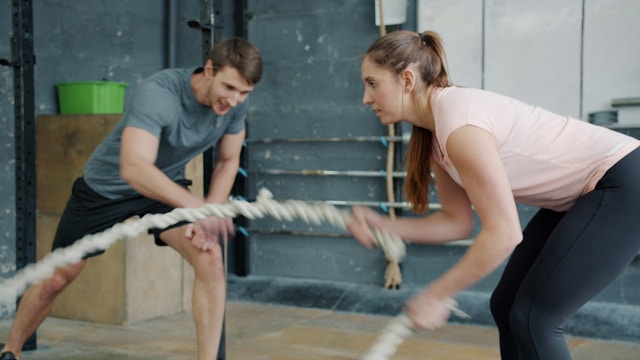
Functional strength has become a popular topic in recent years. Physical therapists and fitness influencers discuss it like a trend, but it’s so much more than that. This is the training that builds muscle and improves coordination with everyday activities (bending, lifting, reaching, and squatting) in mind.
Picking up a bag of groceries, for instance. You likely bend down, grab the bag’s handle, and carry it on one side. So many muscles are used in this movement. Legs, lower back, shoulders, arms, core… You might believe you’ll do this easily for years to come, but the reality is you need to train for this motion, particularly as you age.
Fortunately, there are numerous ways to improve functional strength. Below, you will learn three of the best ways to do just that.
Unconventional Loading And Carries
There’s nothing wrong with conventional lifts. Barbell squats and deadlifts are great. But life rarely hands you a perfectly balanced barbell. It gives you awkward objects, grocery bags, laundry baskets, moving boxes, even a child who refuses to be put down.
That’s where unconventional loading comes in.
Instead of perfectly even weight distribution, you purposely train with uneven or shifting loads. Think sandbags, water-filled implements, or a backpack loaded with weight. These tools force your stabilizing muscles to work harder. This happens because the load moves and challenges your balance.
Carries are particularly powerful. Farmer’s carriers, suitcase carries, and front-loaded carries train your grip, shoulders, core, and hips all at once. They also improve posture. You’re essentially practicing how to move under load – something you do daily without thinking about it.
If you’re curious about how to use backpack weights for training, this is one of the simplest ways to begin. A sturdy backpack with evenly distributed weight turns basic walking, lunges, or stair climbing into functional strength work. There’s no need for complicated equipment.
The key here is control. Stand tall. Walk slowly. Let your body adapt.
Unilateral (One-Sided) Training
It’s very rare to use both sides of your body equally in daily life. You step up stairs one leg at a time. You carry groceries in one hand. You reach with one arm. Yet many gym exercises train both sides evenly.
Unilateral training helps to fix that gap.
Exercises, such as single-leg Romanian deadlifts, split squats, step-ups, and single arm presses, build balance and coordination. They also reveal weaknesses. Some weaknesses are easily missed during bilateral lifts. If one side struggles more than the other, that’s valuable information.
Training one side at a time strengthens stabilizing muscles around the hips, knees, and shoulders. That added stability reduces injury risk and improves overall control.
It doesn’t take much weight to do this, either. In fact, light loads often work better. Why? Because they allow you to focus on balance and proper movement. Slow reps. Good posture. Smooth control.
The goal isn’t to wobble wildly. It’s to own the movement.
Rotational and Core-Integrated Movements
Real life isn’t just forward and backward. It’s rotation, too. Turning to grab something from the back seat of your car. Twisting to put dishes away in the cupboard. Reaching across your body.
Your training should reflect this.
Rotational exercises, like cable chops, controlled torso rotations, and medicine ball throws – strengthen the muscles that stabilize and guide twisting movements. This includes the obliques, deep core muscles, hips, and upper back.
But functional core work isn’t about endless crunches. It’s about resisting unwanted motion and controlling the motion you create. Cross-body lifts, Pallof presses, and similar exercises teach your core to stabilize while your limbs move.
This integration matters. When your core connects with your hips and shoulders, everything feels smoother and stronger. You generate force more efficiently. You protect your spine. You move with confidence.
To conclude, functional strength isn’t about flashy workouts. It’s about preparing your body for the demands of daily life – now and years from now. You will build strength that actually shows up when you need it by adding uneven loads, training one side at a time, and incorporating rotation.
