If you spend hours each day sitting, whether you are at your desk, commuting, or relaxing on the couch, your body is feeling the effects more than you might realize. Prolonged sitting keeps your hips in a shortened position, rounds your spine forward, compresses your spinal discs, and limits the natural rotation and extension your back needs to stay healthy.
Over time, this can lead to poor posture, stiff muscles, tight hips, and even pressure on your sciatic nerve. For women in midlife and beyond, these issues can be even more noticeable.
As we age, our muscles and connective tissues lose some elasticity, our joints may become stiffer, and years of repetitive movement patterns can cause imbalances. That means the little aches you feel now can become bigger problems if you ignore them.
One of the most effective ways to combat this?
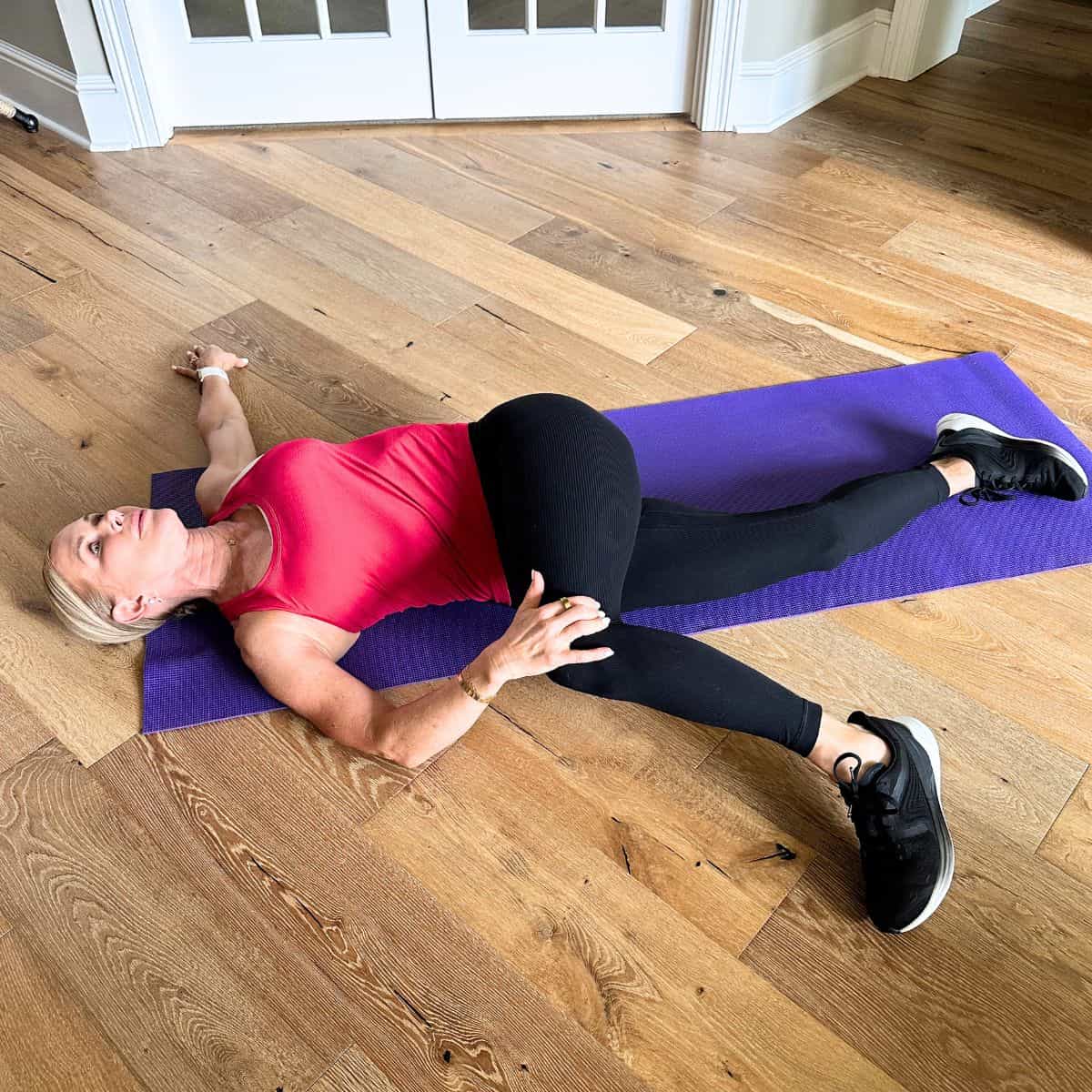
The best sciatica stretches for women over 50 is the lying spinal twist.
Why the Lying Spinal Twist is So Beneficial for Women Over 50
I recommend the lying spinal twist stretch to so many of my clients, especially women over 50, because it addresses several common trouble spots at the same time. Not only does it feel amazing, it helps counteract the exact muscle patterns that develop from years of sitting and leaning forward.
Here’s why this stretch is so valuable for sciatic and lower back pain:
- Stretches and relieves tension in the spine, which can take pressure off the sciatic nerve
- Improves spinal mobility and flexibility, helping you move with less stiffness
- Targets the glutes, lower back, and hips, key areas that often contribute to sciatic pain
- Encourages deep breathing and relaxation, which reduces stress and helps your body let go of tension
For women in midlife, these benefits are especially important.
Sciatica often becomes more common after 50 because of natural changes in spinal discs, a decrease in muscle mass, and tightness in the hips and hamstrings from less daily movement.
A stretch like the lying spinal twist helps restore mobility and reduces discomfort without requiring intense exercise or high-impact movement.
You might also appreciate these 7 ways I prevent joint pain during exercise in my 50’s!
How to Do the Lying Spinal Twist
Follow these simple instructions to perform the lying spinal twist with proper form.
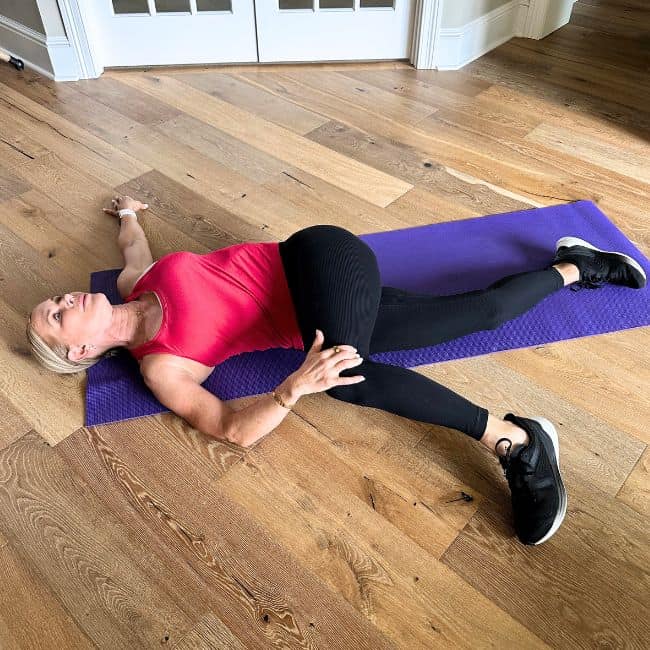
- Lie on your back with your knees bent and feet flat on the floor.
- Extend your arms out to the sides so your body forms a T-shape.
- Let both knees gently fall to one side while keeping your shoulders pressed into the floor.
- Hold the position for 20 to 30 seconds, breathing deeply and allowing your body to relax into the twist.
- Slowly bring your knees back to the center, then repeat on the other side.
For fast sciatica relief, alternate sides back and forth, completing 20 total repetitions, 10 on each side, in the morning and again before bed.
Why It Works for Sciatica
When you sit for long periods, the muscles in the front of your hips (hip flexors) tighten and pull your pelvis out of alignment. The lower back muscles can become shortened and stiff, and your spine loses its natural rotation. This creates pressure on the sciatic nerve, which runs from your lower back down the backs of your legs.
The lying spinal twist helps in two ways.
First, it stretches the muscles and connective tissue along your back, hips, and glutes, opening up space in the lower spine and reducing compression.
Second, it restores gentle rotation to your spine, which improves mobility and helps prevent that “locked up” feeling.
When to Add This Stretch to Your Day
The beauty of this move is that it requires no equipment, takes very little time, and can be done anywhere you have room to lie down.
- Do it first thing in the morning to loosen up after sleeping
- Add it as a midday break after hours of sitting at a desk
- Make it part of your evening routine before bed to release tension and improve sleep quality
If you are dealing with nagging lower back stiffness, tight hips, or occasional sciatic nerve pain, adding the lying spinal twist to your daily routine can be a game-changer.
The Takeaway
For women over 50, protecting your spine and maintaining flexibility is key to staying active, strong, and pain-free. You do not have to overhaul your entire fitness routine or spend hours stretching each day.
A few minutes with the lying spinal twist, done consistently, can help reduce back and sciatic discomfort, improve posture, and restore movement to your spine.
If you have been telling yourself that back pain is just part of getting older, I encourage you to try this simple move twice a day for the next two weeks. You might be surprised at how much better you feel.
