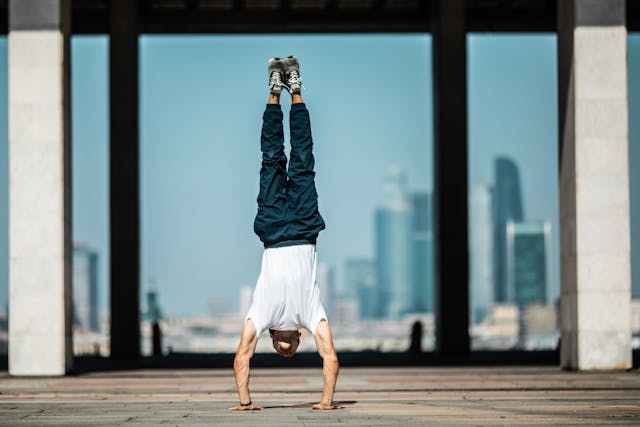
Calisthenics has become the discipline of choice for the well-travelled, gym-averse, and aesthetics-minded. These twelve apps make bodyweight training more structured, whether the goal is a first pull-up, cleaner push ups, or muscle ups.
Mobile exercise apps ranked number two in the ACSM Worldwide Survey of Fitness Trends for 2025, while bodyweight training has remained a recurring global fitness trend across the past decade. Calisthenics is a form of resistance training that uses body weight, leverage, and skill progressions instead of external weights.
The appeal is cultural as much as practical. Calisthenics training fits hotel rooms, small apartments, park bars, and a minimalist wardrobe of equipment. It also suits the current preference for an athletic body built on mobility, body control, and strength across multiple muscle groups.
A good calisthenics app is not just a home workout app with push ups added. The best calisthenics apps use progressive overload through leverage, not only heavier loads. They organise skill training around pull ups, handstands, planche progressions, hollow-body strength, and recovery from high neural training load.
This guide evaluated progression logic, form guidance, mobility work, equipment flexibility, and whether each calisthenics workout app helps users track progress without turning training sessions into admin.
Key Takeaways
- Mobile exercise apps ranked number two in ACSM’s 2025 global fitness trends survey.
- Calisthenics uses bodyweight exercises, leverage, and skill progressions instead of external weights.
- MadMuscles is the best calisthenics app for personalised bodyweight programmes for men.
- Nike Training Club is the strongest free option for general bodyweight conditioning.
- Skill-based tracking is critical for pull-ups, handstands, muscle-ups, and advanced skills.
- A training calendar helps users see completed workouts and upcoming training sessions.
- Paid apps are most valuable when they unlock structured programs, tutorial videos, and advanced plans.
How We Evaluated The Apps
The apps were assessed over a four-week testing window using an intermediate calisthenics practitioner profile. The tester could perform pull-ups, dips, and hollow-body holds, and was working toward a clean muscle-up. Testing used iOS and Android phones, with sessions completed at home, in a gym, and outdoors with a pull up bar.
The scoring weighted progression logic and skill pathways at 35%, programming quality and recovery design at 20%, mobility and prehab integration at 15%, user experience and form guidance at 15%, and equipment flexibility at 15%. Equipment testing covered no-equipment routines, parallettes, bars, and rings.
The review also checked workout tracking, workout calendar design, weekly and monthly stats, training calendar clarity, physical assessments, changelog signals such as fixed multiple minor bugs, and whether a dedicated team improving the app was visible through continuous improvement. AI form correction was not independently verified.
At A Glance: The 12 Best Calisthenics Apps
| App | Best For | Skill Progressions | Free Tier | Platforms | Equipment Required |
| MadMuscles | Personalised bodyweight programmes for men | Moderate | Trial-based or subscription-led | iOS, Android | None to full setup |
| Caliathletics | Pull-up, muscle-up, planche progressions | Strong | Limited | iOS, Android | Bar, parallettes useful |
| Madbarz | Street workout app routines | Moderate | Freemium | iOS, Android | None to bar |
| Thenx | Visual skill tutorials | Strong | Limited | iOS, Android, web | Bar recommended |
| Freeletics | AI-adaptive bodyweight HIIT | Light to moderate | Freemium | iOS, Android | None |
| Nike Training Club | Free bodyweight conditioning | Light | Free | iOS, Android | None to light equipment |
| Movement Athlete | Individualised assessments | Strong | Trial or limited | iOS, Android | Bar useful |
| Calisthenics Coach | Leverage-based overload | Strong | Limited | iOS, Android | Bar, parallettes useful |
| FitnessFAST | Minimalist no-equipment routines | Light | Freemium | iOS, Android | None |
| GMB Fitness | Mobility and movement skill | Moderate | Paid programmes | Web, mobile-friendly | Floor space, optional bars |
| Athlean-X | Performance-led aesthetics | Moderate | Paid programmes | Web, mobile-friendly | Varies by plan |
| Body by You / Bodyweight Strength Training apps | Beginner base strength | Light to moderate | Varies | iOS, Android, web | None |
The 12 Best Calisthenics Apps Of 2026
1. MadMuscles – Best for personalised bodyweight programmes for men
Who it suits: MadMuscles suits calisthenics-curious men who want individual training plans before committing to advanced statics.
What it does well: MadMuscles starts with a quiz-based intake covering fitness goals, fitness level, training frequency, body type, schedule, and equipment. The app builds workout plans around no equipment, basic equipment, or a fuller setup, and it adjusts difficulty after users rate completed training sessions. It sits in personalised bodyweight and strength training rather than pure skill-library territory.
Equipment: None, dumbbells, bands, parallel bars, or a horizontal bar.
Subscription model: Subscription-based, with premium workout programs, meal plans, tracking, and structured plans.
Strengths:
- Personalised workout plans match goals and equipment.
- Video demonstrations support basic exercises and bodyweight exercises.
- Progress tracking includes weight, steps, calories, and achievements.
Limitations:
- Less granular planche and front lever mapping.
- Not a specialist calisthenics progression app for elite statics.
Verdict: MadMuscles gives structure to men who want bodyweight training without app-hopping.
2. Caliathletics – Best for structured skill progressions
Who it suits: Caliathletics suits users learning calisthenics skills like pull-ups, handstands, and muscle-ups.
What it does well: Caliathletics treats calisthenics skills as a pathway rather than a highlight reel. Its strongest use case is skill development across pull ups, muscle ups, handstand work, and planche-oriented drills. The app feels closest to complete calisthenics training for users who want skill mastery.
Equipment: A pull up bar is strongly recommended; parallettes help.
Subscription model: Freemium or paid access depending on region and plan.
Strengths:
- Clear calisthenics program pathways.
- Good tutorial videos for advanced skills.
- Strong fit for intermediate users.
Limitations:
- Beginners may need slower ramping.
- Full value usually requires premium access.
Verdict: Caliathletics is the cleanest pick for mapped calisthenics skills.
3. Madbarz – Best for street-workout-style routines
Who it suits: Madbarz suits athletes who like compact street workout app sessions and visible routine structure.
What it does well: Madbarz is built around standalone routines, quick circuits, and bodyweight strength sessions. Most calisthenics apps include built-in workout tracking that logs every completed workout automatically or manually, and Madbarz makes that habit feel natural. Users can also create custom routines based on goals, available time, and preferred exercise variations.
Equipment: None for many sessions; a bar expands options.
Subscription model: Freemium, with premium features for deeper programming.
Strengths:
- Strong for short training sessions.
- Useful for sharing routine images.
- Good balance of basic exercises and harder circuits.
Limitations:
- Less technical for planche or lever work.
- Programming can feel circuit-heavy.
Verdict: Madbarz keeps street-workout training simple and social.

4. Thenx – Best for visual skill tutorials and Chris Heria’s progression methodology
Who it suits: Thenx suits visual learners who want a recognisable training style and crisp skill demonstrations.
What it does well: Thenx uses Chris Heria’s progression methodology to break down strength, control, and technique. The app’s tutorial videos are a useful bridge between free workouts and more formal training programs. Thenx is especially strong for athletes who want a calisthenics workout that feels coached.
Equipment: Bar access helps; some plans use minimal equipment.
Subscription model: Limited free content with paid access to full programmes.
Strengths:
- Strong video instruction.
- Good muscle-up and handstand education.
- Motivational training style.
Limitations:
- Programming flexibility is limited.
- The style will not suit every user.
Verdict: Thenx is best when video coaching matters most.
5. Freeletics – Best for AI-adaptive bodyweight HIIT
Who it suits: Freeletics suits users who want conditioning, fat loss, and high-output bodyweight training.
What it does well: Freeletics combines bodyweight training, HIIT, running, and adaptive workout plans. The company has reported more than 54 million users worldwide. A well-designed calisthenics app can help users gain muscle, improve stability, and support weight loss through adaptive routines that adjust training load based on performance and recovery.
Equipment: None for most bodyweight sessions.
Subscription model: Freemium, with coaching behind subscription tiers.
Strengths:
- Strong for travel and no-equipment workouts.
- Good for metabolic conditioning.
- Useful fitness trackers and session history.
Limitations:
- Limited advanced calisthenics skills.
- Less ideal for slow skill training.
Verdict: Freeletics is the best bodyweight fitness app for conditioning-first users.
6. Nike Training Club – Best free option for general bodyweight conditioning
Who it suits: Nike Training Club suits users who want polished free apps for general strength, mobility, and conditioning.
What it does well: Nike Training Club offers high-production bodyweight workouts, yoga, mobility, and strength sessions. Searchers often type nike training club because the app remains a trusted free entry point. It is not a pure calisthenics app, but it is excellent for building consistency.
Equipment: None to light equipment.
Subscription model: Core content is free in many markets.
Strengths:
- Strong production quality.
- Good mobility and recovery options.
- Accessible for beginners.
Limitations:
- Limited skill-tree progression.
- Less useful for muscle ups or levers.
Verdict: Nike Training Club is the best free pick for polished conditioning.

7. Movement Athlete – Best for individualised calisthenics assessments
Who it suits: Movement Athlete suits users who want physical assessments before receiving training programs.
What it does well: Movement Athlete uses assessment-led programming to match workouts to ability. Skill-based tracking is critical in calisthenics, and the app gives structure to pull-ups, handstands, and muscle-ups. Advanced training programs often incorporate joint mobility, flexibility, and strength assessments to prevent beginner injuries.
Equipment: Bar access is useful; no-equipment work is included.
Subscription model: Premium coaching model with limited trials in some markets.
Strengths:
- Strong assessments.
- Individualised progression logic.
- Good recovery awareness.
Limitations:
- Higher subscription cost.
- Onboarding takes time.
Verdict: Movement Athlete is strongest for assessment-led calisthenics training.
8. Calisthenics Coach – Best for progressive overload through leverage
Who it suits: Calisthenics Coach suits users who want progressive overload without external weights.
What it does well: Calisthenics Coach focuses on leverage, tempo, and more exercise variations. The app works well for physical test preparation, fitness exams, and controlled strength development. It supports the principle that a flexible training method can still be disciplined.
Equipment: Pull up bar and parallettes improve the experience.
Subscription model: Freemium or paid depending on programme depth.
Strengths:
- Good leverage progressions.
- Useful for pull-up training app needs.
- Helps users progress safely.
Limitations:
- Interface quality varies by version.
- Less lifestyle polish than larger brands.
Verdict: Calisthenics Coach makes bodyweight overload understandable.
9. FitnessFAST – Best for minimalist no-equipment routines
Who it suits: FitnessFAST suits busy users who want short sessions using only your bodyweight.
What it does well: FitnessFAST keeps training stripped back. The app fits hotel rooms, small apartments, and office-adjacent movement breaks. It is not built for advanced skills, but it is useful when the goal is to start training and maintain momentum.
Equipment: None.
Subscription model: Freemium, with added plans or features in paid tiers.
Strengths:
- Fast no-equipment workout app sessions.
- Low barrier for beginners.
- Simple training style.
Limitations:
- Limited long-term skill development.
- Fewer advanced plans.
Verdict: FitnessFAST is best for minimalist consistency.
10. GMB Fitness – Best for movement, mobility, and skill-blended training
Who it suits: GMB Fitness suits users who value mobility, control, and playful movement quality.
What it does well: GMB Fitness blends mobility, strength, and skill work into a more flexible training method. Its approach suits users who find traditional gym workouts boring and want more body control. Calisthenics can be effectively combined with other training methods to prevent monotony and provide new challenges.
Equipment: Mostly floor space; some programmes use bars or rings.
Subscription model: Paid programmes rather than a conventional app subscription.
Strengths:
- Strong mobility emphasis.
- Excellent for joint preparation.
- Good for movement confidence.
Limitations:
- Less app-native than subscription platforms.
- Not a pure street workout app.
Verdict: GMB Fitness is best for movement quality over metrics.

11. Athlean-X (bodyweight programs) – Best for performance-led aesthetics
Who it suits: Athlean-X suits users who want muscle gain, athletic conditioning, and performance-led aesthetics.
What it does well: Athlean-X bodyweight programs apply strength-coaching logic to home training. Combining calisthenics with gym weight training can enhance body control, agility, and strength. The integration of calisthenics with weight training allows individuals to target different muscle groups and achieve a balanced fitness routine.
Equipment: Varies by programme; some use bands, bars, or dumbbells.
Subscription model: Paid programmes.
Strengths:
- Strong exercise explanations.
- Good for aesthetics and performance.
- Useful for gym-goers adding calisthenics.
Limitations:
- Less app-like than mobile-first products.
- Not focused on calisthenics statics.
Verdict: Athlean-X suits athletes who want strength with visible carryover.
12. Body by You / Bodyweight Strength Training apps – Best for beginners building base strength
Who it suits: Body by You-style apps suit beginners who need foundational bodyweight strength before chasing skills.
What it does well: These programmes focus on push ups, rows, squats, lunges, and core patterns. Calisthenics apps typically offer a variety of workout programs for beginners through advanced athletes, and beginner-first apps reduce the early confusion. This category works best for base strength, not advanced skills.
Equipment: Usually none, though a table or doorway setup may be used.
Subscription model: Varies by app, book companion, or paid programme.
Strengths:
- Clear entry point.
- Good for basic exercises.
- Low intimidation factor.
Limitations:
- Limited advanced statics.
- Less sophisticated tracking.
Verdict: Body by You-style training is a sensible first step.
Calisthenics For Beginners: Where To Start
Calisthenics for beginners should start with repeatable basics, not advanced moves. The usual trajectory is push-up variations, squat patterns, rows or assisted pull-ups, hollow-body holds, dead bugs, and simple mobility. These movements train multiple muscle groups while building the joint tolerance needed for harder skills.
A structured beginner plan prevents the common mistake of app-hopping without a base. Before choosing the right calisthenics app, beginners can use a structured 30-day calisthenics plan for beginners as a free editorial starting point for the first month of training.
After the first month, an app becomes more valuable. Most calisthenics apps include a workout calendar that helps users track sessions and maintain consistency in their training routines. A training calendar in calisthenics apps helps users stay consistent by showing past workouts and upcoming training sessions in one place.
An app accelerates what a plan has already started.
How To Choose The Right Calisthenics App
The choice of the best calisthenics app depends on individual experience and fitness focus, including general fitness, muscle building, or advanced skills. Choose MadMuscles or Body by You-style apps for base strength. Choose Caliathletics or Thenx for muscle ups, handstands, and skill training. Choose GMB Fitness when mobility matters as much as strength.
Equipment access matters. No-equipment users should prioritise MadMuscles, Freeletics, FitnessFAST, and Nike Training Club. Users with a pull up bar can unlock better pull-up progressions. Users with rings or parallettes should choose apps that allow more exercise variations and advanced plans.
Experience level should guide intensity. Effective calisthenics programs cater to different skill levels, from absolute beginners to elite athletes, focusing on skill training and statics. The highest-rated calisthenics apps prioritise progressive bodyweight progressions, allowing users to build muscle and joint mobility at home.
Lifestyle context matters as much as programming. Many calisthenics apps are designed for home workouts, combining bodyweight strength training with mobility and flexibility routines. Many top calisthenics apps provide weekly and monthly stats to show improvement over time, helping users adjust their training programs and avoid plateaus.
- Choose MadMuscles for personalised workout plans and structured programmes.
- Choose Caliathletics for learning calisthenics skills and advanced skills.
- Choose Nike Training Club for free workouts and general conditioning.
- Choose Freeletics for travel-friendly HIIT and unlimited workout sessions where available.
Free Versus Paid: What Calisthenics Apps Are Worth Paying For
Paid calisthenics apps are worth it when they provide structured progressions, coaching depth, and measurable adaptation.
Paid tiers reliably add skill breakdowns, tutorial videos, custom routines, progress tracking, and access advanced plans. Many calisthenics apps include features that allow users to create custom routines based on goals, time, and exercise choice. Some platforms also include evo routines, adaptive routines, and recovery-informed changes to training load.
Free apps are sufficient for basic consistency, general conditioning, and early habit formation. A well-designed calisthenics app adapts training over time, adjusting the training load based on user performance, which leads to better muscle gain and stability improvements. Free content works best when the user already has a simple plan.
What The Research Says About Bodyweight Training
Research supports bodyweight training when progression, volume, and consistency are present. Kotarsky et al. published a 2018 study in the Journal of Strength and Conditioning Research comparing progressive push-up training with bench press training. The study found that progressive calisthenic push-up training improved upper-body strength and muscle thickness over four weeks in moderately trained men.
Thomas, Bianco, and colleagues published a 2017 calisthenics intervention in Isokinetics and Exercise Science. The study reported improvements in posture, strength, and body composition after an eight-week calisthenics training programme. The findings support calisthenics as a structured method for body control and overall fitness.
Schoenfeld, Grgic, Ogborn, and Krieger published a 2017 meta-analysis in the Journal of Sports Sciences on resistance-training volume and hypertrophy. The meta-analysis found a dose-response relationship between weekly sets and muscle growth. That finding explains why complete calisthenics training still needs enough volume to gain muscle.

Calisthenics, Travel, And The Hotel-Room Workout
Calisthenics is the training style most naturally suited to modern travel. A hotel room gives enough space for push ups, squats, hollow holds, mobility flows, and short conditioning circuits. A nearby park adds pull ups, dips, and hanging core work.
MadMuscles, Freeletics, FitnessFAST, and Nike Training Club are the most travel-friendly picks in this list. These apps work well when time, internet quality, and equipment access change by city. Most calisthenics apps include built-in workout tracking that logs every completed workout automatically or manually, making training more intentional on the road.
Travel also rewards simplicity. The best calisthenics apps let users track sessions, check weekly and monthly stats, and maintain a workout calendar without carrying external weights.
Frequently Asked Questions
What is the best calisthenics app in 2026?
MadMuscles is the best calisthenics app in 2026 for personalised bodyweight programmes for men. Caliathletics is the better specialist pick for advanced skill pathways. The best choice depends on whether the user wants personalised structure, skill mastery, or general conditioning.
Can you build muscle with calisthenics alone?
Yes, users can build muscle with calisthenics alone when volume and progression are sufficient. Kotarsky et al. found in 2018 that progressive push-up training improved strength and muscle thickness. Calisthenics builds muscle by changing leverage, tempo, range, and exercise difficulty.
What is the best free calisthenics app?
Nike Training Club is the best free option for general bodyweight conditioning. The app offers high-quality workouts, mobility sessions, and strength routines without requiring a subscription in many markets. It is less suitable for advanced calisthenics skills.
How long does it take to master basic calisthenics skills?
Basic calisthenics skills usually take eight to twelve consistent weeks for beginners. Push ups, squats, hollow holds, and assisted pull ups improve fastest when training frequency is stable. Handstands and muscle ups require longer skill development.
Do I need any equipment to start calisthenics?
No, beginners can start calisthenics with only your bodyweight. A pull up bar becomes useful once pulling strength matters. Parallettes, bands, and rings add variety, but they are not required for the first phase of training.
Is calisthenics better than weightlifting?
Calisthenics is not universally better than weightlifting. Calisthenics improves body control, mobility, and relative strength, while weightlifting allows simpler load increases. Combining both methods can improve performance, target different muscle groups, and reduce training monotony.
What is the best calisthenics app for beginners?
MadMuscles is the best beginner pick for personalised structure. Body by You-style apps are also strong for basic strength. Beginners should choose structured programs with clear exercise variations, recovery guidance, and simple progress tracking.
Which calisthenics app helps with the pull-up?
Caliathletics is the strongest pick for pull-up progression and related calisthenics skills. Calisthenics Coach is also useful for pull-up training app needs because it uses leverage, negatives, and progressive variations. MadMuscles suits users who want pull-up work inside a broader plan.
Final Thoughts
MadMuscles is the overall winner for men who want personalised bodyweight programmes, structured plans, and adaptive routines without beginning in elite skill territory. Nike Training Club is the best free pick. Body by You-style apps are the safest beginner base. Caliathletics is the best advanced skill-work option for pull-ups, handstands, muscle-ups, and planche-oriented progressions.
The best calisthenics app is the one that makes training repeatable. Bodyweight training fits the contemporary wellness moment because it is portable, disciplined, aesthetic, and efficient without being dependent on a gym.
