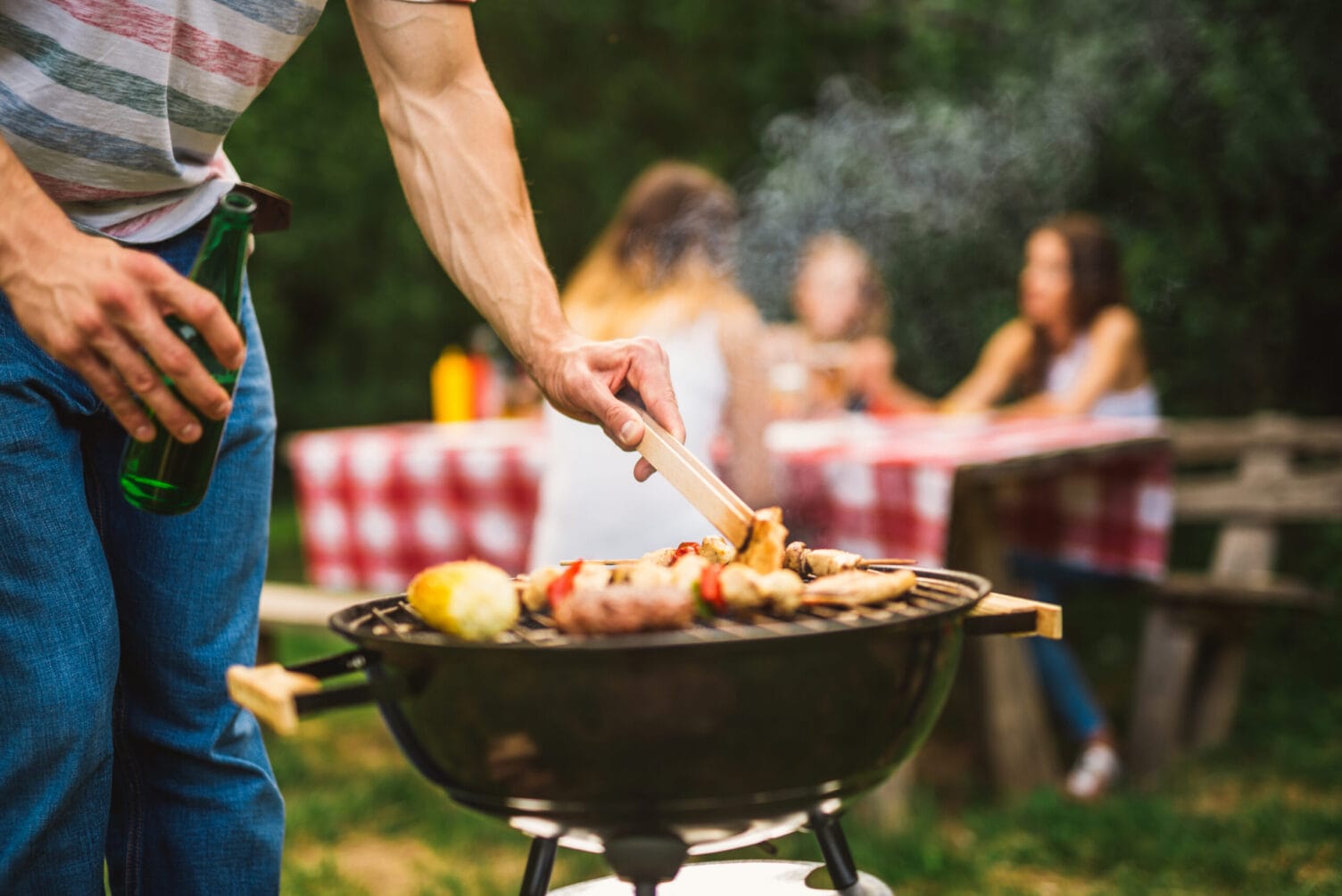
Memorial Day weekend signals the unofficial start of summer, and for many people, that means the first Memorial Day cookout of the season.
It’s the first backyard gathering of the season—the grill heating up, a table filling with sides, and people outside with plates in hand.
And whether you’re hosting the cookout or showing up as a guest, it can help to have a simple strategy for navigating the spread while still supporting your health goals.
Here’s how to approach a Memorial Day BBQ with balance in mind.
Start With Lean Protein for Healthy Grilling
At most BBQs, the protein is the centerpiece of the meal. Starting there can make everything else easier.
Protein supports satiety and helps keep meals satisfying, which can be especially helpful at gatherings where food is available for hours (1).
Some BBQ-friendly options include:
- Grilled chicken breast (or thighs for a more budget-friendly flavorful option)
- Turkey burgers (often an affordable choice when feeding a crowd)
- Shrimp skewers
- Salmon fillets
- Lean beef burgers
If you’re hosting, these proteins are easy to grill in batches. And if you’re attending, look for whichever protein option is available and build the rest of your plate around it.
“When you start a BBQ meal with a protein source, it naturally helps the meal feel more satisfying and balanced,” says Emily Sullivan, RD, MyFitnessPal dietitian.
Simple marinades with olive oil, citrus, herbs, or garlic can add plenty of flavor without needing heavy sauces.
Put Vegetables on the Grill
The grill isn’t just for burgers and chicken.
Vegetables cook beautifully over open heat, developing caramelized edges and smoky flavor that makes them just as appealing as the main dish.
Good grilling options include:
- Zucchini and summer squash
- Bell peppers
- Mushrooms
- Asparagus
- Corn on the cob
- Tomatoes
- Onion wedges
Toss vegetables lightly with oil and seasoning before grilling, or place them on skewers for easy cooking.
“Vegetables contribute fiber, vitamins, and minerals that support overall health while adding color and variety to the table (2),” notes Sullivan.

Choose Memorial Day Side Dishes on Purpose
BBQ spreads usually include several side dishes, and that’s part of the fun. Many of these classic sides are also simple and affordable to prepare for a crowd, which is one reason they show up at so many cookouts.
For your plate, rather than sampling a little of everything, choose two sides intentionally: one hearty option and one lighter, produce choice.
Hearty sides might include:
- Potato salad
- Pasta salad
- Baked beans (a classic, budget-friendly BBQ staple)
- Chips and dip
Fresh sides might include:
- Cucumber or tomato salad
- Coleslaw
- Watermelon
- Mixed greens
“Pairing your favorite BBQ side with fiber-rich foods like vegetables, fruit, or beans can help make the meal more satisfying overall (3),” adds Sullivan.
This approach keeps the meal enjoyable without feeling like you’re skipping the foods you came to enjoy.
Build a Balanced Plate
At a buffet-style BBQ, building your plate intentionally can make the biggest difference.
A simple guideline is to aim for a mix of:
- Protein
- Vegetables or fruit
- One or two sides you enjoy
Extras like sauces, buns, and dips absolutely count toward your overall nutrition, so if you’re tracking meals in MyFitnessPal, remember to log them along with the rest of your plate.
Most importantly, remember that one holiday meal doesn’t define your habits.
Healthy Grilling Tips for Memorial Day
Grilling is a Memorial Day tradition, but some people wonder whether grilled meat is healthy. The concern comes from compounds that can form when meat is cooked at very high temperatures.
Two of these compounds, heterocyclic amines (HCAs) and polycyclic aromatic hydrocarbons (PAHs), can develop when proteins react to high heat or when fat drips onto flames and creates smoke that sticks to the meat (4).
In very high amounts, these compounds have been shown to cause cancer in animal studies, though typical exposure from grilling is much lower (4).
Fortunately, a few simple grilling habits can help reduce the formation of these compounds:
- Choose lean cuts of meat. Leaner options like chicken breast, fish, and turkey produce fewer fat drippings, which can reduce smoke and PAHs while cooking (5,6).
- Marinate meat before grilling. Marinades, especially those with acidic ingredients and herbs, can significantly reduce HCA formation (6,7,8).
- Flip meat frequently. Turning meat more often can help prevent burning and limit the formation of HCAs (9).
- Avoid heavy charring. Remove blackened portions and avoid overcooking meats as these can increase HCA levels (4,10).
- Use moderate heat or indirect grilling. Keeping food slightly farther from direct flames can reduce smoke exposure and PAHs (6,5,9).
Adding fruits and vegetables to the grill is another easy strategy. They don’t produce HCAs and provide fiber, vitamins, and beneficial plant compounds that support overall health (11).
According to Sullivan, “grilling can absolutely be part of a healthy eating pattern, especially when you include grilled vegetables with proteins and use the right techniques.”

Frequently Asked Questions (FAQs)
- Can BBQ food fit into a healthy eating pattern?
Yes. Grilled proteins, vegetables, and balanced sides can easily be part of a nutritious eating pattern. The key is focusing on variety, portion balance, and grilling techniques rather than avoiding certain foods altogether.
- What are the healthiest foods to grill?
Lean proteins like chicken, fish, turkey burgers, and shrimp are good options. Vegetables such as zucchini, peppers, onion, and corn also work well on the grill and provide fiber and nutrients.
- Should I track a cookout meal?
That depends on your personal goals. You may find it helpful to log meals in MyFitnessPal throughout the day, including at the cookout to stay mindful of your habits, while others prefer to simply enjoy the day and return to their routine afterward.
- Is charcoal grilling bad for you?
Not necessarily. The bigger concern is very high-heat cooking and heavy charring, which can create compounds like HCAs and PAHs. Using moderate heat, marinating meat, and avoiding blackened portions can help reduce those risks (4,6,10).
Bottom Line
Memorial Day BBQs are about gathering, celebrating the start of summer, and sharing a meal outdoors.
Whether you’re firing up the grill or filling your plate as a guest, a few simple strategies can help you enjoy the holiday while still supporting your health goals. Start with protein, add grilled vegetables, and choose your sides intentionally to build a balanced plate.
And if you’re curious how your meal fits into your overall habits, MyFitnessPal can offer an easy way to stay mindful without taking away from the moment.
