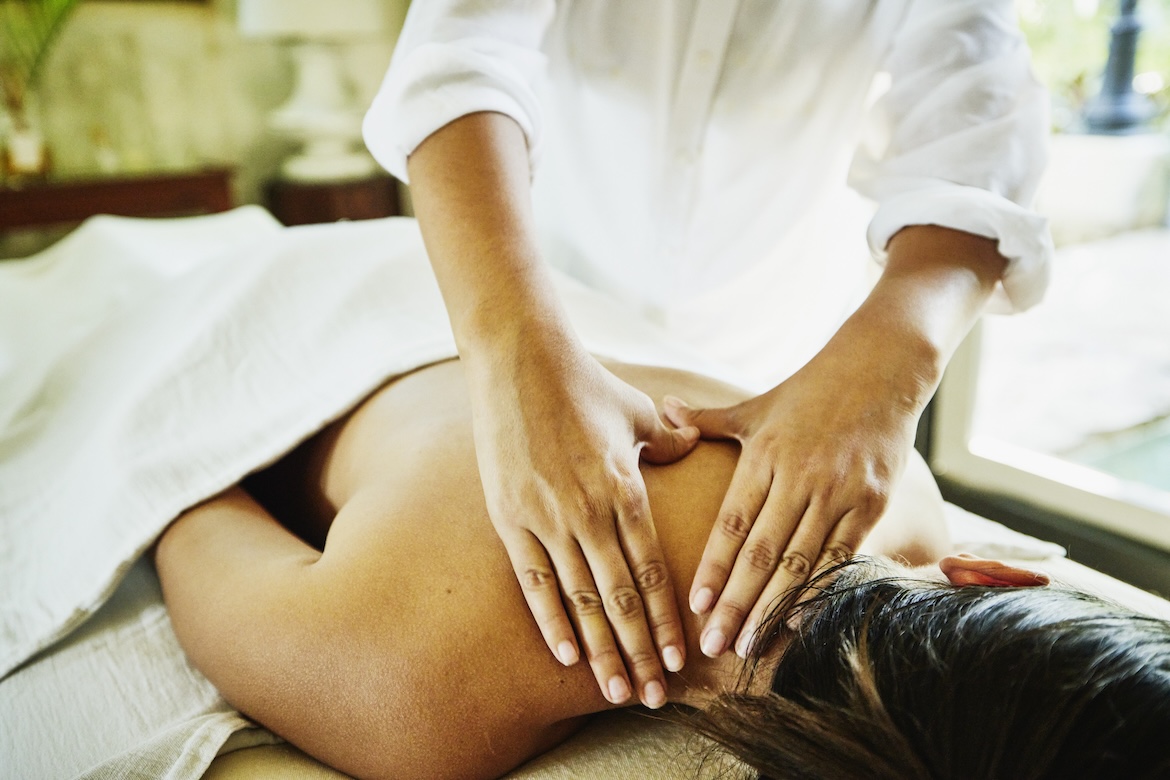
As much as I try to relax during a massage, my overly analytical mind is usually reeling with questions.
How did the massage therapist know that I’m so tight right there? Can they tell that I never stretch after a workout? Is it weird I left my underwear on? Do they like me? (Fellow people-pleasers get it.)
As this habit is somewhat counter to the point of a massage, I thought it’d be best to clear up some of my questions before my next appointment. I asked two massage therapists what they wish more clients knew—from tips to make the most of your massage to how not to make their job more difficult to insights from their side of the massage table.
1. Making the most of your massage starts before your appointment
Yes, a massage is intended to help you relax. But if you’re already relaxed before you lay on the massage table, you’re ahead of the game. Matthew Perry, LMT, a licensed massage therapist and learning and development manager at The NOW Massage, recommends taking a hot shower or bath prior to your appointment to help calm your nervous system and relax your muscles.
Give yourself plenty of time to get to your appointment so you aren’t stressed about running late, he says, and use any extra moments while in transit or in the lobby to do some breathing exercises, suggests Kevin Ramsey, LMT, a licensed massage therapist and body care service innovation manager at Massage Envy. “That can be a really powerful way to clear your mind of distractions and think about what your goals are for the massage,” he says.
Related Stories
Make sure you’re plenty hydrated when you arrive. “If you come in dehydrated, that prevents the therapist from being effective because the muscles aren’t pliable enough,” Perry says. Also avoid any pre-massage caffeine. “That enhances the nervous system when we’re trying to calm the nervous system down,” he says.
One more key preparation step: Turn off and put away your phone. “Think about your massage as being one hour of time when nothing else is going on,” Ramsey says. “You’re tuning out the rest of the world.”
2. Keep your therapist in mind when getting ready
It’s an obvious point, but one some of us probably take for granted: Your massage therapist has to spend an hour in extremely close proximity to you. So, keep their comfort in mind when you’re getting ready at home. Avoid strong perfumes, for instance, and make sure your hygiene is on-point—another reason not to skip that pre-massage shower or bath.
Try to limit the number of accessories you’re wearing so your therapist doesn’t have to work around them, and come in comfy clothes, Perry says. As for how much of those clothes you leave on for your massage, that’s up to you. Don’t worry about whether leaving on undergarments or clothes will affect your massage—your therapist should be able to use the different techniques at their disposal to accommodate whatever makes you most comfortable, Perry says.
3. Communication is key
When your massage therapist asks you a question, they aren’t just going through the motions. Massages are highly personal and often highly customized, and any information you give your therapist during your intake will help shape your experience.
“I rely so much on communication to identify what each person is dealing with,” Ramsey says. “If they say low back pain, I want to ask follow-up questions—if they know why their back is hurting, if they’ve had previous injuries or surgeries—that’s very important for us to customize their massage.” Don’t be shy in asking your therapist questions, either, he says.
Keep the communication going if you have any feedback during the massage. “We’re skilled and experienced therapists, but we’re not mind readers,” Ramsey says. “Communicate if you need more or less pressure, if you need more or less time in a specific area—even a small communication can go a long way.”
4. Your massage therapist learns a lot about your body quickly
In addition to what you share with your therapist verbally, they’re also taking in cues that’ll help them tailor your massage, like your posture, your body language, and even how you walk, says Ramsey. “We’re trained in tracking someone’s gait to identify things in the ankles, the knees, the hips, and the shoulders where muscle imbalances might come into play,” he says.
Once they start your session, they’ll be paying attention to how you’re breathing, as well as how your muscles respond to the massage.
“Most therapists, after a certain number of years in the field, would probably identify as having a set of eyes through their skin,” Ramsey says. They’ll note things like muscle tone, flexibility, range of motion, and imbalances. “A lot can be understood within a few minutes, and I want to inform them what I’m noticing in the same way I would love for them to inform me about any conditions or issues they’re feeling,” he says.
“Think about your massage as being one hour of time when nothing else is going on. You’re tuning out the rest of the world.” —Kevin Ramsey, LMT
5. You’re in control
“The atmosphere of the massage room is dedicated entirely to the person and their goals,” Ramsey says. “They should dictate the environment.” If something like the volume of the music, the lighting, or your temperature is impacting your experience, speak up. “Everything is within their control,” he says.
6. Don’t try to help
Perry says many people have the instinct to try to “help” during their massage—like when he’s trying to move an arm or adjust the sheet. This can get “chaotic and messy,” he says, plus it defeats the purpose of getting a massage. “You’re there to relax,” he says. “Let me do my job.”
7. Your massage therapist isn’t a chiropractor or doctor
Massage therapists are trained to do soft tissue manipulation for the muscles. So unless they have additional credentials, “diagnosis is going to be outside of our scope,” Ramsey says.
Also outside of their scope: Cracking your back, which Perry says is a common request. “We may apply some pressure, and you may get a little pop, but that’s not our goal as a massage therapist,” he says. “We’re not working on any type of chiropractic techniques.”
8. You can keep the benefits going post-massage
Your massage is an investment, so get your money’s worth by doing everything you can to prolong the benefits. That includes staying hydrated (and avoiding anything that’s going to dehydrate you, like alcohol), and doing some light movement and stretching, Perry says. “Moving the body is super important because otherwise it just kind of retracts back to how it was and goes back to that muscle memory,” he says.
You’ll also want to avoid activities that tend to exacerbate any pain that you have, Ramsey says. (So if you got the massage because you have neck pain from staring at a computer all day, try to schedule your massage so that you don’t have to go straight back to sitting at your desk.)
Your goals for your massage will determine what your post-massage routine looks like and what time of day will be best to get your treatment, Ramsey says. If you want your massage to energize and enliven you, perhaps you schedule it for the morning so you’re ready to take on the day. If it’s more about relaxation and calming down, snagging the last appointment of the day could mean you get to crawl right into bed afterward.
